
Model Context Protocol, or MCP, gives AI applications a standard way to interact with external capabilities. It can reduce repeated interface work, but it does not decide which information a user may access or which business action is appropriate. Those decisions remain part of the implementation.
Define the capability before the connector
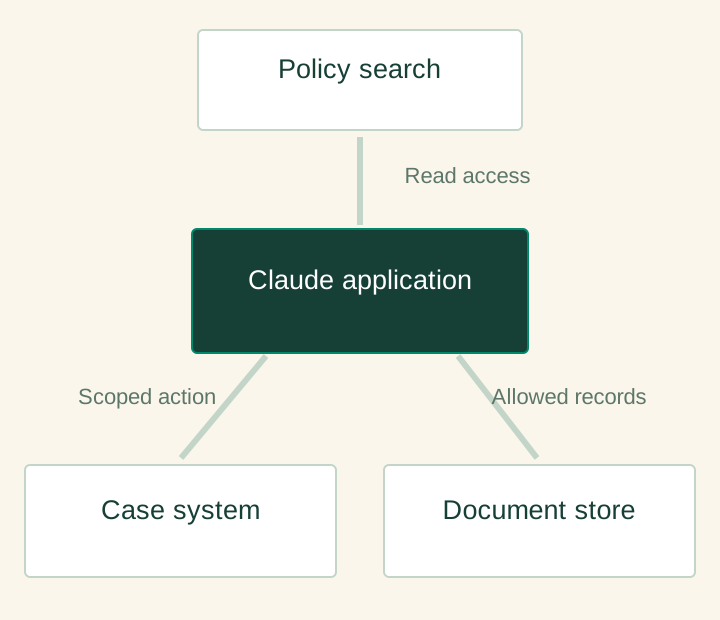
Specify the task a tool performs, the information it needs and the changes it may make. Keep capabilities narrow enough to test and authorize. A read-only policy search and an account-update operation should not inherit the same authority simply because they connect to the same application.
Understand the connection model
MCP uses a host, clients and servers to exchange capabilities such as tools and resources. That common structure helps organize integrations; it does not eliminate the underlying application API or operational work. For a buyer, the important deliverable is a reliable, supportable capability with a documented access model. MCP architecture.
Enforce identity and input controls
Validate inputs at the server, restrict permissions to the intended resource and require approval for consequential actions. Follow the protocol’s security guidance, including controls around tokens and authorization. Treat content returned by a tool as data, not as new authority to execute unrelated actions. Test attempts to cross these boundaries.
Specify a tool contract the owner can approve
For a case-note tool, define which case may be accessed, who may add a note, which fields are required and whether existing content can be changed. Include a maximum input size, validation rules and a response that distinguishes accepted, rejected and unknown outcomes. Keep read and write permissions explicit.
Test the contract with malformed inputs, a revoked user and an attempted cross-record action. Then test a partial outage. The service owner should understand how the application behaves in each case. This contract is the durable integration asset; the transport protocol is one part of how the capability is exposed.
Plan for failure and change
Specify timeouts, retries and how to avoid duplicate writes. Record the action outcome and provide a clear user response when a system is unavailable. Assign responsibility for API changes, credential rotation and connector upgrades. Acceptance testing should include revoked access and partial failure, not only a successful call.
Before the next decision
Planning checklist
- Narrow tool contract and authorized user scope
- Server-side input and permission checks
- Retry, timeout and duplicate-action controls
- Connector owner and version-change process
Sources and further reading
Sources checked 5 October 2026. The design recommendations in this guide are AID’s analysis. Sector obligations depend on the use case and jurisdiction.
Apply this to a defined workflow
AID can connect Claude to approved systems through bounded tools with explicit permissions and tested failure handling.