
A pilot should reduce a specific uncertainty. If it begins with a broad ambition to explore AI, the final demonstration may still leave the sponsor unable to decide what to fund. Scoping is the work of making that decision possible.
Choose the uncertainty worth testing
Identify the issue that prevents a decision today: source quality, extraction accuracy, integration feasibility or review effort. Select a workflow narrow enough to isolate it. A pilot may test several measures, but it should have one primary decision. Document what the exercise will not establish, such as readiness for all business units or all document types.
Prepare cases and a baseline
Gather representative inputs with agreed expected outcomes. Include exceptions and cases the system should decline or escalate. Measure the current process sufficiently to understand whether the proposed workflow changes total effort. Keep the acceptance cases separate from development examples so that tuning does not substitute for evaluation.
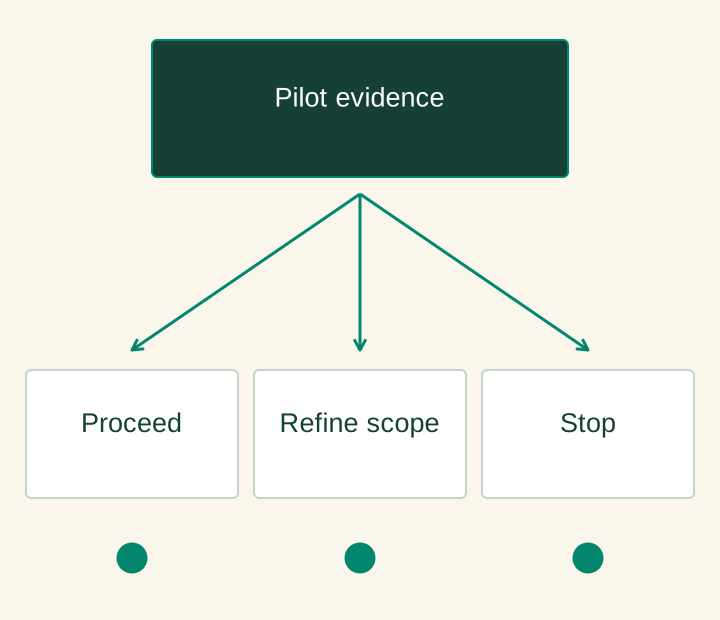
Set the decision rules
Agree which results justify a next phase, which require a defined correction and which mean stop. Name the person who can make that decision and schedule the review. Include client obligations such as data access and reviewer availability. A fixed scope is meaningful only when dependencies and the procedure for changing them are explicit.
Keep the baseline honest
For a document-summary pilot, measure the complete existing task: locating records, preparing the summary, verifying it and correcting mistakes. Compare the proposed workflow over the same boundary. Counting only the seconds spent generating a draft can make an inefficient process appear successful. Record assumptions about staff experience, document quality and review depth.
The sponsor should see distributions and exceptions where they matter, not only an average. A workflow may perform well on routine files while leaving complex cases with more work. Decide whether that result supports a limited release, a different scope or no further investment. The pilot’s purpose is to support that choice.
Ask for the complete result
The final package should include test results, failure analysis, operating constraints and a realistic next-step scope. It should not imply production readiness merely because a prototype worked. Where a result is inconclusive, explain why and identify the smallest further test that could resolve it. Keep the next investment tied to a remaining uncertainty.
Before the next decision
Planning checklist
- Single investment decision and named sponsor
- Representative cases and current-process baseline
- Success, correction and stopping conditions
- Evidence package and bounded next-step recommendation
Sources and further reading
Sources checked 5 October 2026. The design recommendations in this guide are AID’s analysis. Sector obligations depend on the use case and jurisdiction.
Apply this to a defined workflow
AID’s Governed Pilot is fixed-scope. If the agreed success criterion is not met, the client does not pay.