
A claim-file summary, an underwriting recommendation and a coverage decision have different consequences. An implementation should identify those differences before choosing its review process. The same model can be used in each, but the authority granted to the workflow should not be assumed.
Map the decision and the supporting work
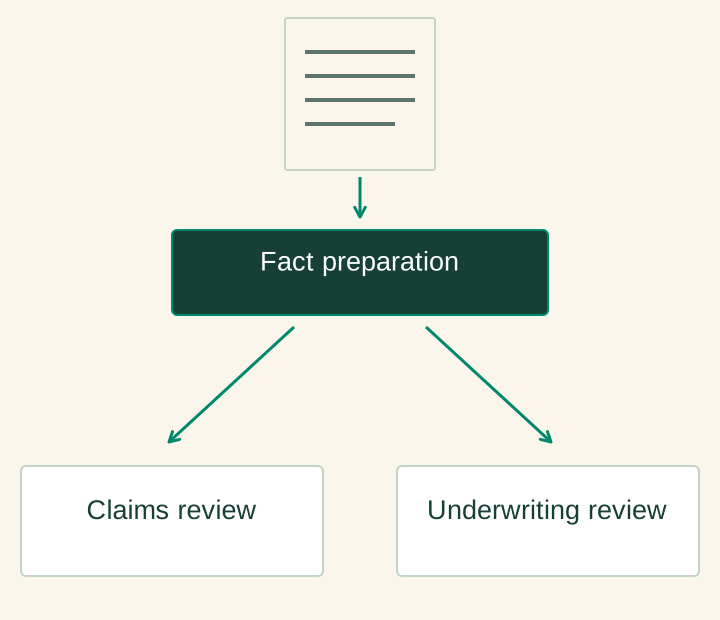
Describe the records entering the workflow, the work product produced and who uses it. Separate extraction and organization from judgment about coverage, liability or eligibility. Document the boundaries in terms the operational team uses. A preparation workflow should not become a decision engine through a change in how staff rely on it.
Preserve the underlying evidence
Keep policy language, endorsements, dates and file documents attached to the statements they support. Surface conflicting or missing material. A reviewer needs to see why the system included a fact and which version it used. Evaluate omissions as well as incorrect statements; a concise summary can be misleading if it leaves out a material qualification.
Fit controls to the operating jurisdiction
The NAIC’s AI materials describe governance expectations and the need for AI-supported decisions to follow applicable insurance law. State adoption and requirements vary. The carrier’s legal and compliance teams should identify the requirements for the relevant products and jurisdictions, then connect those requirements to review, testing and documentation. NAIC AI overview.
Review omissions as a separate failure class
For a claim-file chronology, compare the prepared record with a reviewer’s reference. Check whether material dates, conflicting accounts and relevant endorsements remain visible. A summary can contain no invented facts and still omit the fact that changes the reviewer’s interpretation. The acceptance method should make that omission a distinct finding.
For underwriting preparation, distinguish an extracted attribute from an inference about eligibility or risk. Keep source evidence and uncertainty visible to the underwriter. These distinctions help define a useful scope without implying the AI can replace professional judgment or apply a uniform rule across products and jurisdictions.
Review changes against the same files
Retest representative files when the model, prompt, policy collection or extraction logic changes. Compare corrected facts, omissions and reviewer effort, not only overall fluency. Retain the approval record and unresolved limitations. Monitor how staff actually use the output so that a change in reliance is treated as a change in scope.
Before the next decision
Planning checklist
- Preparation and decision authority documented
- Source links for material facts and policy terms
- Jurisdiction and product review
- Change tests with omission and correction analysis
Sources and further reading
Sources checked 5 October 2026. The design recommendations in this guide are AID’s analysis. Sector obligations depend on the use case and jurisdiction.
Apply this to a defined workflow
AID can scope document intake and source-linked preparation workflows under the insurer’s review and governance requirements.