
Healthcare document search brings together two different decisions: which information a person is permitted to see and whether that information supports an answer. Retrieval-augmented generation, or RAG, must address both. Good search relevance cannot compensate for an access-control mistake.
Decide whether patient information is needed
A policy assistant may be useful without receiving patient information. Begin by separating general policies, operational records and patient-specific material. Include only the data required for the task. HHS states that cloud providers handling electronic protected health information on behalf of a covered entity generally require appropriate business associate arrangements and risk analysis. A product label alone does not establish the suitability of a deployment. HHS guidance.
Apply permissions before retrieval
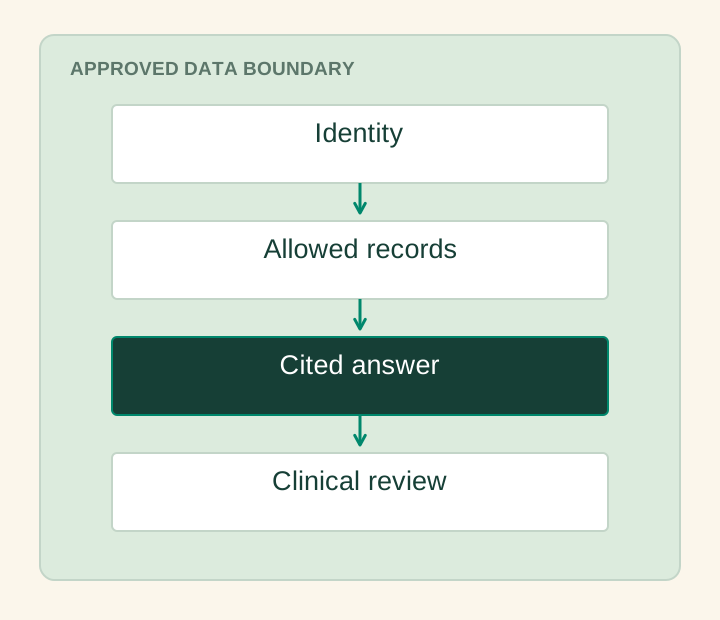
The search layer should use the authenticated user’s permissions before selecting passages. Document-level controls must survive ingestion, indexing and updates. Test accounts with different roles against the same question and verify that restricted material is excluded, including from citations, snippets and logs. Treat access revocation as a testable event rather than a future housekeeping task.
Keep the evidence attached to the answer
Preserve section headings, tables, effective dates and important qualifications when preparing documents. Present source links next to the claims they support. When documents conflict or evidence is incomplete, expose the gap to the user. A citation is useful only if it opens the correct source and supports the statement being made.
Design the no-answer path deliberately
Consider a staff member searching for a procedure while two policy versions remain in the collection. A useful system should identify which version is effective, show its provenance and flag a conflict that cannot be resolved. It should not choose based only on which passage has the closest wording to the question. The document owner needs a way to correct the collection and verify that the correction has taken effect.
Similarly, a user without access to a patient record should not receive a response that reveals the record’s existence or contents through an error message. Include these negative cases in testing. They often expose design weaknesses that a set of routine policy questions will never reveal.
Evaluate the review workflow
Check retrieval quality separately from answer quality. Measure whether the right passage was found, whether the answer stayed within it, and whether reviewers could verify it efficiently. Include outdated policies and missing evidence in the acceptance set. Clinical recommendations and patient-specific decisions require a review design agreed with qualified clinical and compliance owners.
Before the next decision
Planning checklist
- Approved data categories and business associate arrangements
- Role-based tests for search and citation access
- Document ownership, versioning and removal process
- Clinical review and escalation rules
Sources and further reading
Sources checked 5 October 2026. The design recommendations in this guide are AID’s analysis. Sector obligations depend on the use case and jurisdiction.
Apply this to a defined workflow
AID’s Regulated RAG Accelerator connects approved source collections to a controlled retrieval and review workflow.